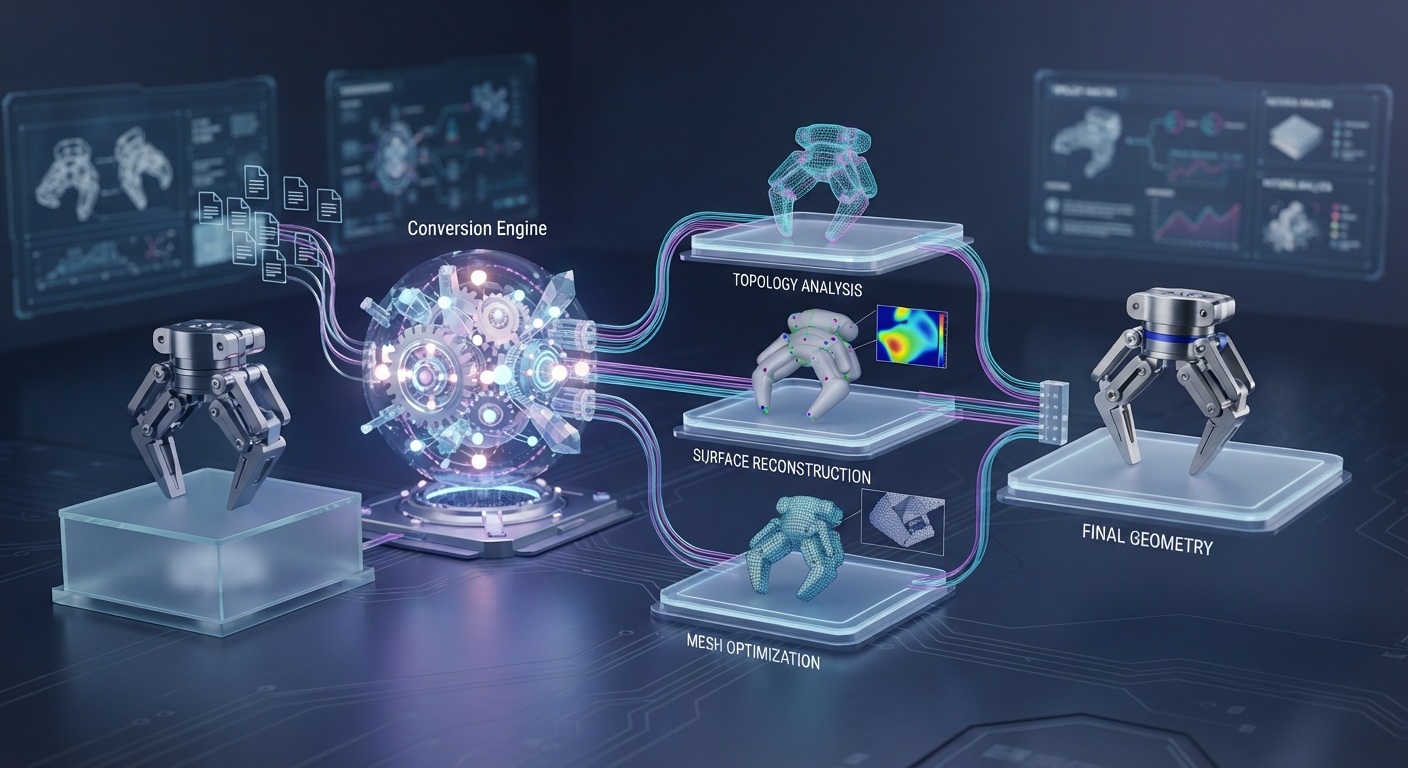
Modern engineering applications often need to handle sophisticated 3D models, large datasets, and specialized workflows. Developing every capability from scratch can take significant time and resources. engineering software development services can help organizations combine specialized 3D components with custom application logic, creating software that addresses specific engineering requirements while reducing unnecessary development effort.
Specialized components can provide foundational capabilities for geometry processing, visualization, CAD data exchange, and model management. The development team can then focus on the application's unique features, user experience, and integration requirements. This approach can be particularly useful for organizations developing professional tools for design, manufacturing, simulation, inspection, or engineering data management.
Starting With Clear Requirements
A successful development project begins by identifying what the application actually needs to accomplish. Different engineering users may require very different capabilities.
A design application may need advanced modeling functions, while a viewing application may primarily require fast visualization and measurement. Another system might focus on converting CAD data or processing large collections of engineering files.
Defining these requirements early helps developers determine which capabilities should come from specialized components and which should be developed specifically for the application.
Using 3D Geometry Components
Geometry processing is one of the most technically demanding parts of engineering software. Applications may need to create and manipulate solids, surfaces, curves, edges, and complex features.
Using a specialized geometry component can provide a foundation for these operations without requiring developers to implement every mathematical and geometric function independently.
The technology should be evaluated using realistic models. Complex surfaces, detailed components, and large assemblies can reveal performance or accuracy requirements that simple test files may not demonstrate.
Adding Efficient Visualization
A professional engineering application needs effective 3D visualization. Users should be able to rotate models, zoom into components, inspect geometry, and navigate assemblies without unnecessary delays.
Specialized visualization components can help development teams provide these capabilities while reducing the amount of low-level graphics programming required.
Large assemblies deserve particular attention. Rendering thousands of components can place substantial demands on system resources, so developers should test visualization performance with production-scale datasets.
Supporting CAD Data Exchange
Engineering workflows often involve several CAD systems. Models may arrive from customers, suppliers, or other internal teams in formats different from those used by the application.
Specialized data exchange components can help applications import and export supported CAD formats. This can reduce the need for manual conversion and make the application more useful within multi-system engineering environments.
Developers should test not only basic parts but also complex assemblies and models containing important attributes or metadata.
Managing Engineering Information
A 3D model can contain much more than geometry. Assemblies may include component hierarchies, names, identifiers, properties, and other information that supports engineering processes.
Specialized model-management capabilities can help developers organize this information and expose it through the application's interface. This can improve workflows such as assembly navigation, component inspection, design review, and data preparation.
The development team should determine which information users actually need before deciding how it will be managed.
Automation and Integration
Engineering applications frequently need to connect with existing systems. These may include manufacturing platforms, simulation tools, product data systems, or internal databases.
Specialized components can provide technical foundations for integration and automation. Developers can use them to create workflows for batch processing, file conversion, model validation, or other repetitive operations.
Automation can be particularly valuable when users regularly process large numbers of engineering models.
Testing for Real-World Performance
Specialized components should be tested as part of the complete application rather than evaluated only in isolation. Developers should examine memory usage, processing speed, geometry accuracy, file compatibility, and behavior with large assemblies.
Testing with realistic engineering data helps identify bottlenecks early. It also provides useful information about how the application will behave under actual user workloads.
Creating a Flexible Development Strategy
Specialized 3D components can provide a strong foundation for engineering software, but successful development still depends on thoughtful architecture and clear requirements. Developers need to select components that fit the application's technical environment and long-term goals.
By combining reusable geometry, visualization, data exchange, and model-management capabilities with custom application features, organizations can create specialized engineering software without unnecessarily rebuilding foundational technology.
A carefully planned approach to engineering software development services can help teams accelerate development while maintaining the flexibility needed for complex 3D workflows. With realistic testing, scalable architecture, and a focus on user requirements, specialized components can become valuable building blocks for modern engineering applications.
#C3DLabs #C3DModeler